BIMSTEC | SAARC | Regional Cooperation | Geopolitical Tensions | Indo-Pacific Strategy
The post-cold war period saw the strengthening of regional multilateral organisations with regional blocs such as the European Union (EU) and Association of South-East Asian Nations (ASEAN) leading the way in reaping benefits. However, this multilateral ‘moment’ eluded South Asia—as its main vehicle for regional integration, the South Asian Association for Regional Cooperation (SAARC), remained stagnant and ineffective.
A major reason is hostilities between India and Pakistan as evident with the failure to hold a summit since 2016. New Delhi, which alleges Pakistan’s involvement in terrorist attacks on India, including the one on an Indian army camp in Kashmir, also alleges Islamabad of harbouring terrorists against India. It has since adopted a policy of non-engagement with Pakistan.
Meanwhile, India has prioritised strengthening its relations with South-East Asian countries where it has greater trade opportunities and commitments compared to its immediate neighbourhood. Pakistan has also shown a lack of interest in regional integration as typified by their objection to the SAARC Motor Vehicle Agreement (MVA).
However, it would be wrong to just blame the two rival countries for SAARC’s ineffectiveness as other member nations have displayed a lack of proactiveness in pushing the agenda of closer integration. Some members perceive SAARC as a mechanism for India to pursue regional hegemony and therefore get wary of any initiatives put forward by New Delhi. Additionally, there has been a reluctance to discuss sensitive security issues by all countries, instead preferring to tackle them on a bilateral level. Trade has also remained a thorny issue as South Asian countries fear trade imbalances and being outcompeted by regional rivals.
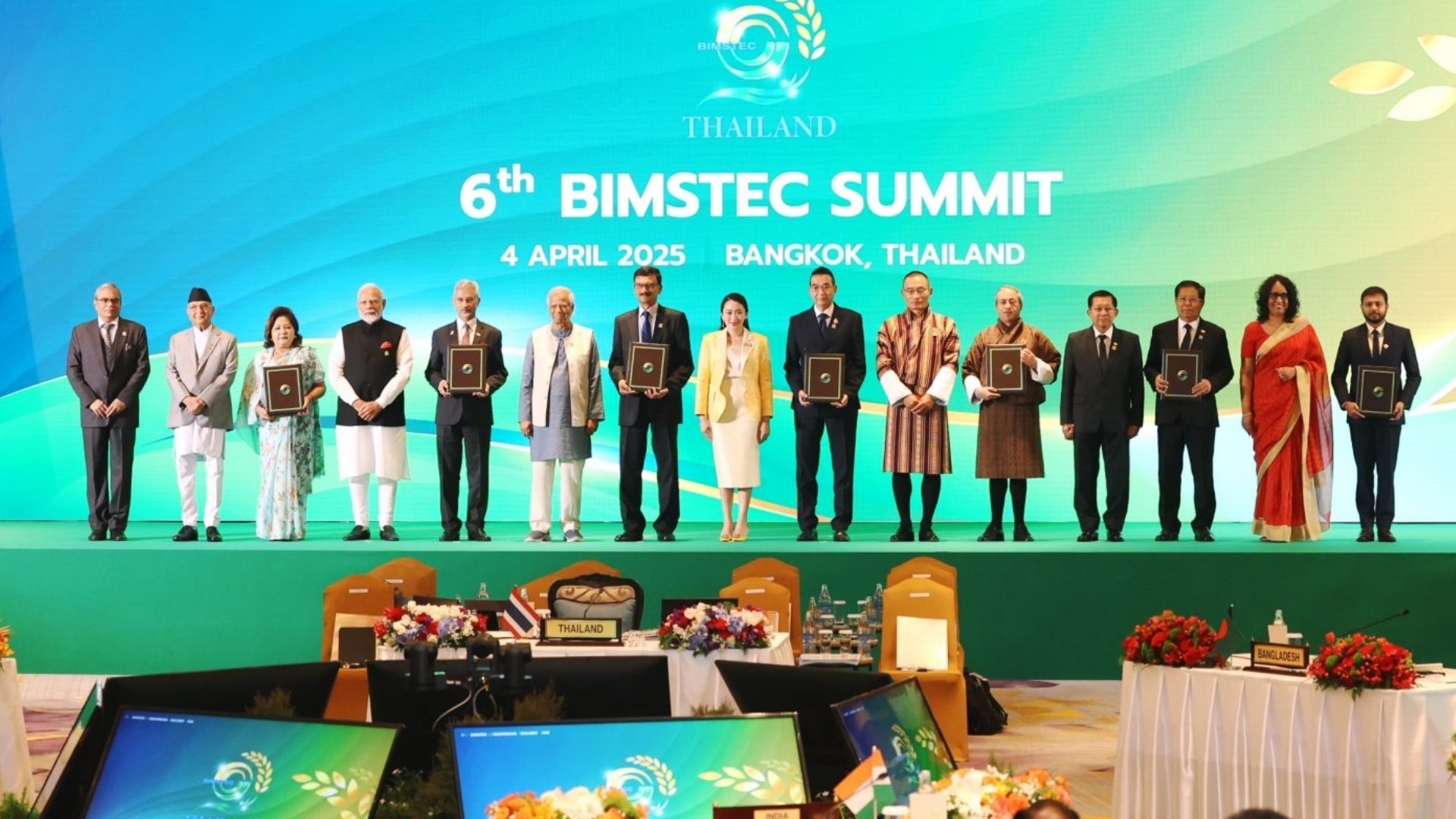
To this fractured regional cooperation effort, the Bay of Bengal Initiative for Multi-Sectoral Technical and Economic Cooperation (BIMSTEC) emerged as an alternative. The group includes five SAARC countries: India, Nepal, Bangladesh, Bhutan, and Sri Lanka along with ASEAN countries, Myanmar and Thailand. With the omission of Pakistan, there was optimism that the organisation would avoid gridlock that stalled progress within SAARC.
India was not subtle about its preference. In 2019, Prime Minister Narendra invited BIMSTEC leaders to his second swearing-in ceremony, a privilege earlier extended to SAARC leaders in 2014.
BIMSTEC offered focus on pragmatic economic and connectivity projects promising significant benefits for its members. For landlocked countries such as Bhutan and Nepal, it meant access to ports and routes facilitating trade outside the region. For India, it aligned closely with its ‘Act East’ policy in closing the developmental gap and underconnectedness in its North-East regions. For other countries, it would provide an opportunity to diversify their economic relations. Overall, it meant closer integration between South Asia and South-East Asia.
To this end, BIMSTEC has gained some traction in recent years. It established a permanent secretariat in 2014 in Dhaka and all member countries view it positively despite the irregularity of summits. BIMSTEC has signed a memorandum of understanding with the UN Office on Drugs and Crime, a positive first-step in tackling transnational crime within the region. India has opened dialogues on establishing United Payment Interface (UPI) to boost regional trade and tourism. More recently, researchers and experts from BIMSTEC and ASEAN sat down for a two-day policy roundtable to discuss challenges and opportunities in agriculture.
But BIMSTEC also faces issues that plagued the SAARC. In 2019, Indian Minister for External Affairs, S. Jaishankar, had noted “SAARC has certain problems. Even if you were to put the terrorism issue aside, there are connectivity issues, there are trade issues”. Delay in adopting the Free Trade Agreement (FTA) has been a major roadblock to its economic integration. South Asian countries currently practice a certain degree of protectionist policy. For instance, India’s agriculture and dairy industries are particularly sensitive and even America has not been able to persuade New Delhi to open up these sectors. Nepal’s business sector has voiced similar concerns about being outcompeted and losing their market share to Indian businesses if the economy opens up further.
Additionally, the political environment has not been conducive to regional integration. Political instability in the region is a norm, particularly in Myanmar and recently in Bangladesh. Moreover, there are now escalating geopolitical tensions to consider. The Sino-Indian rivalry has only intensified over the years and has already paralysed multilateral efforts.
Bangladesh, once a key partner of India, has forged closer ties with China and Pakistan since the ouster of the Hasina government. The fallout is visible with two countries imposing reciprocal trade bans.
Other countries such as Sri Lanka and Nepal have been treading a fine line between New Delhi and Beijing for years now whereas Myanmar has been largely bankrolled by China. Meanwhile, India has imposed its Bureau of Indian Standards (BIS) certification on imports, aimed particularly at curtailing Chinese components. This has been hurting Nepali exporters of steel and cement.
Furthermore, the perceived association between BIMSTEC and India’s Indo-Pacific strategy is likely to ruffle the feathers of other member countries who wish to maintain close relations with China.
While bilateral tensions between Bangladesh and India could ease, geopolitical anxieties stemming from Sino-Indian rivalry is unlikely to dissipate any time soon. This is not unique to South Asia. Even ASEAN, which is heralded as a model for multilateralism, has struggled to remain effective due to Sino-US rivalry. It is becoming increasingly evident that large and comprehensive multilateral organisations tackling diverse issues and areas with broad memberships and consensus-based decisions are losing influence. This calls for a fundamental rethinking of what kind of multilateralism is actually possible.
Can minilateralism be an alternative?
A new smaller model has now emerged called ‘minilaterals’ which are pragmatic groupings with exclusive membership that emphasise issue-based cooperation. Examples include the Trilateral Security Dialogue (TSD) between Japan, Australia, and the USA and the Mekong-Ganga Cooperation involving India and five ASEAN nations. These groupings are designed to be ephemeral and are characterised by their informality.
South Asia is already experimenting this under Bangladesh, Bhutan, India and Nepal (BBIN) initiative where the previously rejected Motor Vehicle Agreement (MVA) under SAARC has gained more favour. There is also potential to collaborate on energy trade due to complementary needs. Bhutan and Nepal, with their surplus renewable energy during monsoon, can trade with India and Bangladesh who have high energy demand. Although this is already being done at the bilateral level, it could be scaled up.
The infrastructure and political costs of such an initiative is low, while the benefit is significant: they can help normalise regional cooperation in a region where it has remained largely absent. As such a cooperation will entail limited security aspects, it is less likely to escalate geopolitical tensions and pushovers.
Instead of pursuing lofty regional goals, it would be prudent to take a pragmatic approach as minilateralism and slowly foster regional integration. After all, even ASEAN started off as a minilateral in 1967 involving only Indonesia, Singapore, Malaysia, Thailand, and the Philippines who were motivated by their shared desire to contain communism. It only expanded to its current state after the Cold-War when geopolitical tensions eased considerably.
Read More Stories

NEPSE falls nearly 75 points as market sentiment wavers
The stock market was unable to maintain the gains seen on Tuesday, slipping...

India has begun its long-delayed population census. Here's why it matters
India has begun the worlds largest national population count, which could reshape welfare...
The United Nations has called on Israel to repeal a law passed by...


Business + Finance + Economy + Tech + Environment + Nepal & South Asia + In-depth Analysis + News + Investigation + Research + Expert Opinion + Anatomy of Complex Issues.