India-US trade tensions | Double standards | Global South Diplomacy | Strategic Autonomy
“Barbād gulistān karne ko bas ek hi ullu kaafi tha,
Har shākh pe ullu baithā hai, anjām‑e‑gulistān kyā hogā.”
— Bashir Badr
One owl would have been enough to destroy the garden—but now each branch has one. What will be left?” Today, the verse echoes through our fractured world. In this world, the self-proclaimed guardians of global order are increasingly seen as agents of its decay, applying rules with a convenience that benefits themselves. India, caught in the crosshairs of this hypocrisy, is right to call it out.
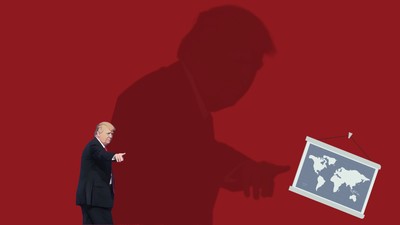
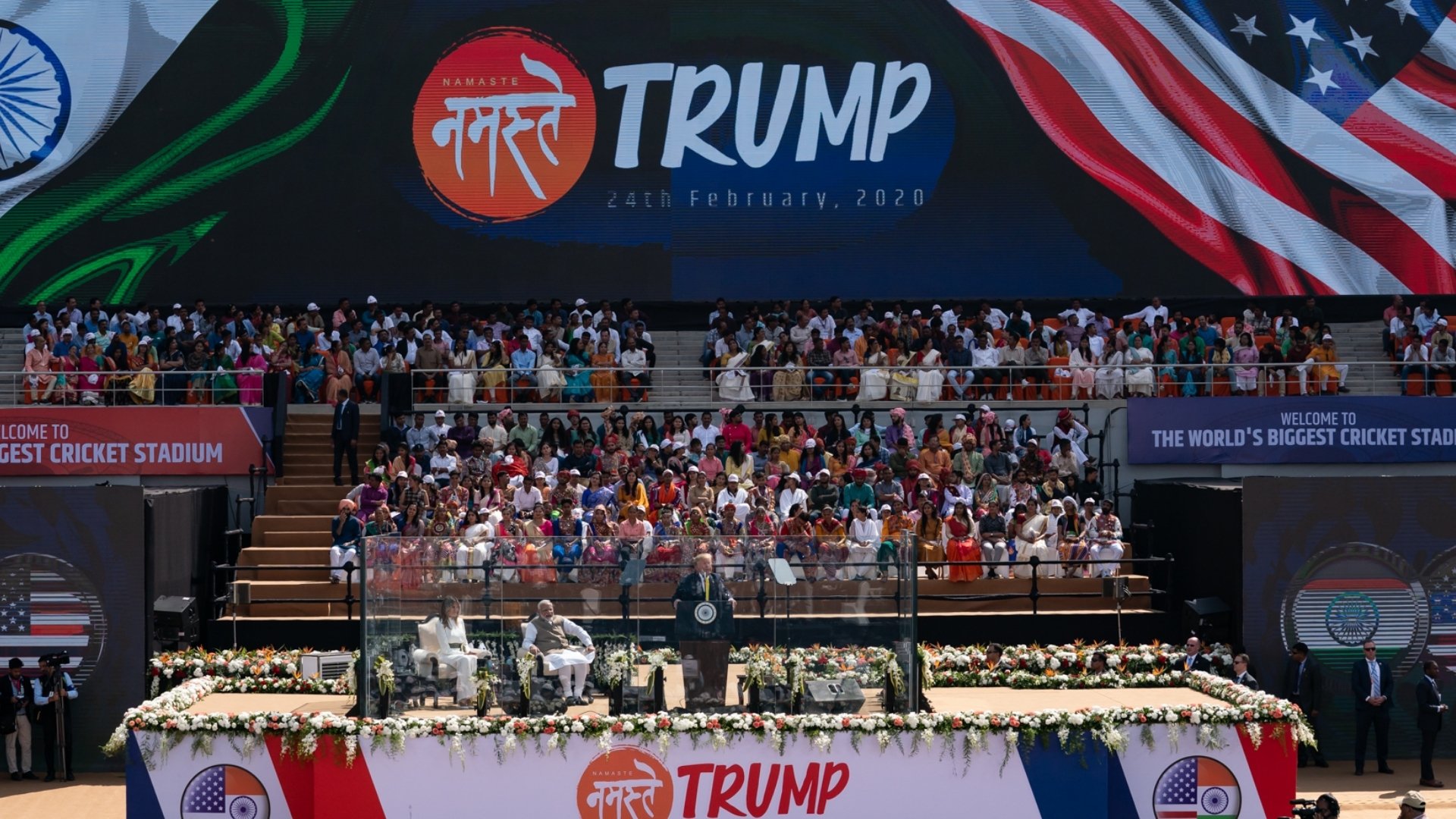
In a move that has sent shockwaves through the robust India-US trade relationship, President Donald Trump’s administration in August 2025 imposed punitive tariffs, hiking them to a staggering 50% on a wide range of Indian exports, including pharmaceuticals, textiles, and chemicals. While ostensibly justified by claims of “unfair trade,” the action is widely interpreted as economic retaliation for India’s continued energy and military partnership with Russia amid Western sanctions on Moscow.
This late July, the EU sanctioned Nayara, a private oil refiners based in India with joint India-Russia holdings. It also banned the import of refined oil made from Russian crude, again hurting Indian refiners.
The West’s hypocrisy laid bare
The American and EU justification for targeting India rings hollow when examining the West’s own trade with Russia. The European Union (EU), a key US ally, has continued to be a major purchaser of Russian fossil fuels since the Ukraine war began. Its imports still totals around $11 billion despite having sharply declined since the Russian invasion of Ukraine.
Despite this, no punitive secondary tariffs or broad economic ‘punishments’ have been imposed on these nations by the US, which itself continues to import certain Russian goods such as nuclear fuel, chemical fertilisers.
The Gaza double standard
Nowhere is this hypocrisy more apparent than in the Western response to Israel’s war on Gaza. Since late 2023, the conflict has led to a catastrophic loss of civilian life, with the death toll now exceeding 59,000, a significant number of whom are women and children, according to reports from the UN and the Gaza Health Ministry.
A particularly horrifying statistic is the killing of nearly 1,400 Palestinians seeking food aid between late May through July 2025. Many of these deaths occurred near distribution sites operated by the Gaza Humanitarian Foundation (GHF), a joint Israeli-American private contractor established in February 2025. Human rights organisations have accused Israeli forces of routinely opening fire on starving civilians at these sites, labelling the acts as potential war crimes. The GHF itself has faced criticism from over 170 charities and NGOs for failing to uphold humanitarian norms.
Moreover, the humanitarian situation is dire, with the UN warning that a “worst-case scenario” of famine is unfolding. The World Food Programme warned on July 25 that the hunger crisis is dire, with 90,000 women and children in urgent need of treatment for malnutrition. The agency projects that 470,000 people will face “catastrophic hunger”—its most severe classification—through September.
Yet, the West’s response has been the opposite of punitive. Instead of sanctions, military and economic support for Israel has surged. In April 2024, the US approved a massive $14.1 billion arms and aid package for Israel. Since the conflict began in October 2023, total US military aid reached at least $17.9 billion by September 2024, the highest annual figure ever. This is all in addition to the standing agreement to provide $3.8 billion in annual military aid through 2028. The commitment from Washington remains, in earlier President Biden’s own words from April 2024, “ironclad.”
Germany, a leading European power, has been a significant military supplier. Between October 2023 and May 2025, it approved military exports to Israel worth approximately €485.1 million ($554.3 million), reports Just Security, a daily digital law and policy journal. These exports include firearms, ammunition, and armoured vehicles. Despite a temporary suspension following a case at the International Court of Justice, exports have since resumed.
An investigative report by Disclose, an independent media based in France, revealed that Thales delivered electronic components—specifically TSC 4000 IFF transponders—for the assembly of Israel’s Hermes‑900 armed drones. These were supplied even after the start of the Gaza conflict, enabling drone operations.
Reports show that German arms manufacturer Rheinmetall supplies Israel with weapon components such as tank ammunition and missiles. These exports have sparked political backlash and accusations of contributing to human rights violations.
This stands in stark contrast to the response to Russia’s invasion of Ukraine, which was met with swift, unified, and severe sanctions from the West. This disparity, where Russia faces punitive measures while Israel receives increased support despite a devastating civilian death toll equivalent to genocide, has led critics and human rights organisations to decry a glaring double standard that undermines the international rules-based order. The differing responses are often attributed to long-standing political alliances, strategic interests, and, for nations like Germany, a historical sense of responsibility towards the state of Israel.
Trump’s protectionist pattern
The recent tariffs are not an isolated incident but a continuation of a protectionist pattern. In 2018, Trump imposed 25% tariffs on steel and 10% on aluminium, affecting a significant portion of global trade in steel and aluminium, including major US trading partners and allies such as China, Mexico, Canada, India and the EU, among others. In 2019, the US revoked India’s generalised system of preference (GSP) trade benefits, which had affected $5.6 billion in exports.
These actions are taken even as the US and EU prop up their own industries with massive subsidies, such as the $25 billion US Farm Bill and the EU’s €55 billion ($63.95 billion) Common Agricultural Policy.
India speaks back
India is no longer silent in the face of this hypocrisy. It is meeting the West on equal terms, with a candour that has resonated across the Global South.
India’s Ministry of External Affairs responded with force and clarity. “India’s energy purchases are governed by commercial considerations and energy security imperatives for our 1.4 billion people,” read a statement issued on August 6. “Attempts to conflate these with trade policy are neither justified nor acceptable,” further adding that tariffs on India for actions that several other countries are also taking in their own national interest is unfortunate. On the other hand, Rahul Gandhi, the country’s Leader of Opposition in Lok Sabha (India’s lower house), has referred to it as “economic blackmailing” and “bullying”.
Meanwhile, a day after Trump’s tariff announcement, India’s National Security Advisor Ajit Doval travelled to Moscow to engage in discussions with Russian President Vladimir Putin amid increasing US pressure. Reportedly, External Affairs Minister S Jaishankar is likely to visit soon.
Earlier, at the GLOBSEC Bratislava Forum in June 2022, Minister Jaishankar’s message on its purchase of discounted Russian oil, which it had increased since the same year, was unequivocal: “Europe has to grow out of the mindset that Europe’s problems are the world’s problems, but the world’s problems are not Europe’s problems.”
At the same forum, “I don’t want to sound argumentative but then tell me if buying Russian gas is not funding the war [in Ukraine]. It’s only Indian money and oil coming to India which funds [the war] but it’s not gas coming to Europe which funds [it],” he said, brushing aside suggestions that India’s oil purchases are helping fund the Russian campaign in Ukraine.
The garden has been ravaged before
This is not a new phenomenon. The West’s application of self-serving rules has deep historical roots. In colonial times, British tariffs systematically dismantled India’s thriving textile economy to create a captive market for British cloth.
Post-World War II, institutions like the International Monetary Fund (IMF) and General Agreement on Tariffs and Trade (GATT) were structured to consolidate Western economic dominance.
More recently, in March 2018, the US formally challenged India at the World Trade Organisation (WTO), alleging that several of its export subsidy programs—spanning sectors including pharmaceuticals—violated global trade rules and amounted to more than $7 billion annually in prohibited subsidies. A WTO panel ruled in favour of the US in October 2019, directing India to withdraw the schemes.
The case underscored how powerful economies leverage global trade institutions to protect their commercial interests, even when it affects developing nations’ access to affordable medicines and industrial growth programs.
Despite its valid criticism of the West’s double standards, India is no less than an aggressor to its neighbours. The South Asian republic is reluctant to buy electricity from hydropower plants in Nepal with Chinese investment although it engages in trade and investment with China amounting to billions of dollars—even bearing a trade deficit of nearly $100 billion. In the past, it also imposed an unofficial blockade on Nepal, severely disrupting trade and significantly choking the country’s economy. There are several other instances where it has acted through coercive diplomacy with its neighbours.
Bashir Badr’s verse encapsulates this critical moment. The “owls” on every branch are not external adversaries but the very architects of the post-war order, who now selectively dismantle it to suit their interests.
Read More Stories
NEPSE falls nearly 75 points as market sentiment wavers
The stock market was unable to maintain the gains seen on Tuesday, slipping...

India has begun its long-delayed population census. Here's why it matters
India has begun the worlds largest national population count, which could reshape welfare...
The United Nations has called on Israel to repeal a law passed by...


Business + Finance + Economy + Tech + Environment + Nepal & South Asia + In-depth Analysis + News + Investigation + Research + Expert Opinion + Anatomy of Complex Issues.