Bangladesh Tribunal Verdict | Death Sentence | Ex-PM Sheikh Hasina | Political Violence
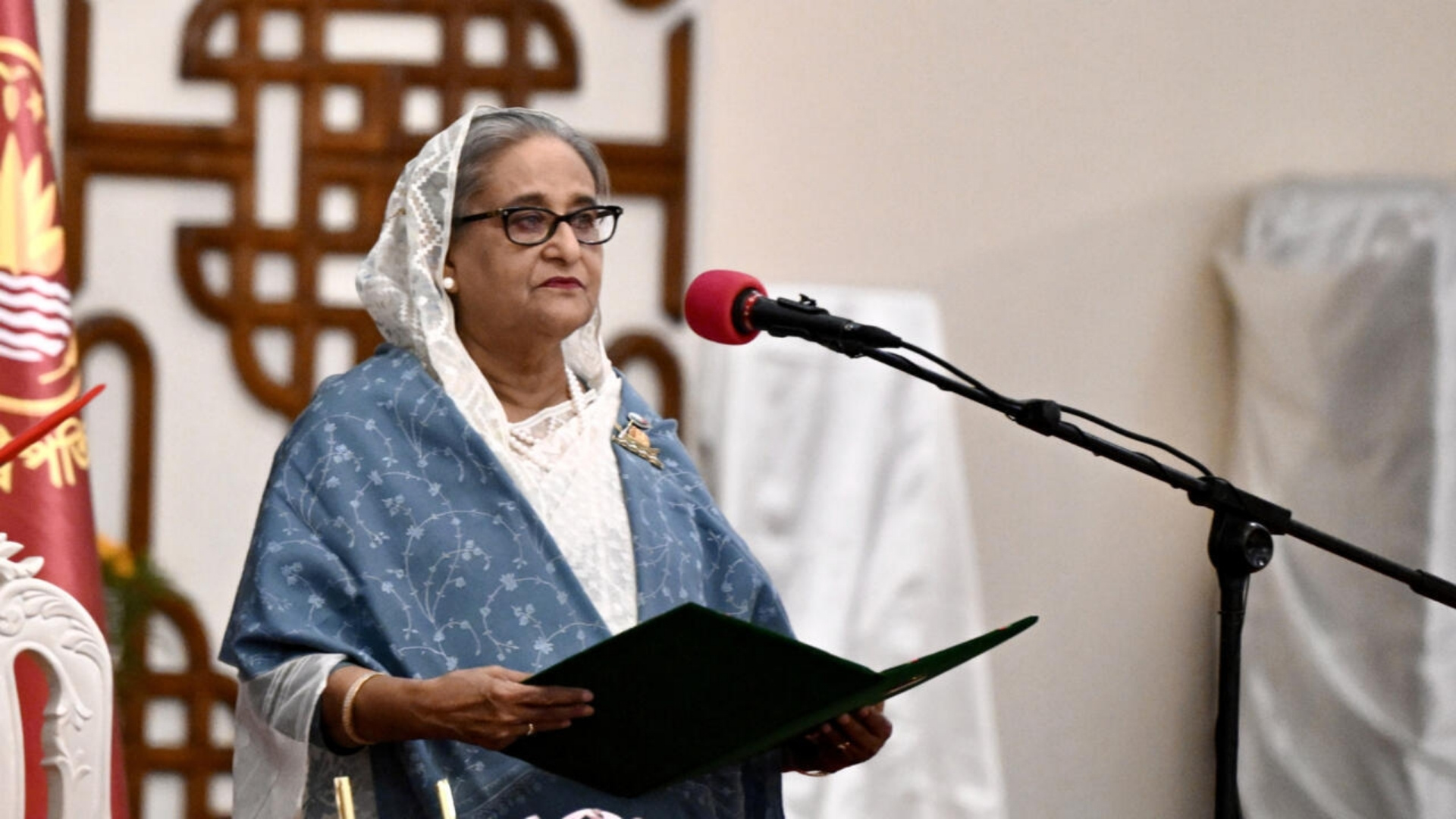
The tribunal found Hasina guilty on all five charges, concluding that she, along with former police chief Chowdhury Abdullah Al‑Mamun and former home minister Asaduzzaman Khan Kamal, orchestrated and enabled atrocities during the unrest.
Hasina, now 78, was tried in absentia while living in New Delhi, India, after fleeing Bangladesh following the fall of her government in August 2024. Both Asaduzzaman and Hasina were declared fugitives and remain outside the country. Al‑Mamun, the only accused in custody, has pleaded guilty and turned state witness.
Five charges against Sheikh Hasina
The tribunal charged Hasina with five counts of crimes against humanity.
Charge 1 alleges incitement and negligence, claiming she gave orders that provoked violence against student protesters and failed to prevent or punish crimes committed under her authority. Charge 2 involves the use of lethal force, including the deployment of helicopters, drones, and live ammunition to suppress demonstrations.
Charge 3 accuses her of directing targeted killings, including that of student activist Abu Sayed, and coordinating attacks that killed unarmed civilians. Charge 4 concerns destruction of evidence, citing the incineration of bodies in Ashulia.
Charge 5 addresses superior command responsibility and joint criminal enterprise, holding Hasina accountable for coordinating with aides to carry out the crackdown and failing to prevent crimes committed by subordinates.
The three‑member bench, led by Justice Golam Murtaza with Justice Md Shofiul Alam Mahmud and Judge Md Mohitul Haque Enam Chowdhury, began proceedings at noon, broadcasting the verdict live on Bangladesh Television. The case covers crimes committed between July 15 and August 5, 2024, during mass student demonstrations against Hasina’s government.
Prosecutors allege that the trio directed security forces to use lethal force, resulting in multiple deaths: Abu Sayed was shot on July 16, 2024, outside Begum Rokeya University, while six students were killed on August 5, 2024, in Chankharpul, Dhaka. On the same day in Ashulia, six people were shot; five bodies were burned, and one person, still alive, was allegedly burned as well.
The formal charges, documented in 8,747 pages, include superior command responsibility, joint criminal enterprise, and failure to prevent or punish murder, attempted murder, and torture.
Chief Prosecutor Tajul Islam told reporters last week that the prosecution had sought the death penalty for Hasina and Asaduzzaman, urging the court to deliver the maximum sentence. Families of victims attended Monday’s proceedings, calling for the harshest possible punishment.
Ahead of the verdict, security was tightened around the tribunal compound. The Awami League, Hasina’s now-banned party, announced a “complete shutdown” for Sunday and Monday in response to the ruling, with sporadic bomb blasts and vehicle torchings reported in Dhaka and other areas.
Defence lawyer Md Amir Hossain rejected the allegations, calling them “false and fabricated” and asserting that a separate group carried out the violence that destabilised the country.
The verdict marks a pivotal moment in Bangladesh’s political landscape, underscoring ongoing tensions between the interim government and the ousted Awami League leadership.
(With inputs from agencies)
Read More Stories

NEPSE falls nearly 75 points as market sentiment wavers
The stock market was unable to maintain the gains seen on Tuesday, slipping...

India has begun its long-delayed population census. Here's why it matters
India has begun the worlds largest national population count, which could reshape welfare...
The United Nations has called on Israel to repeal a law passed by...


Business + Finance + Economy + Tech + Environment + Nepal & South Asia + In-depth Analysis + News + Investigation + Research + Expert Opinion + Anatomy of Complex Issues.