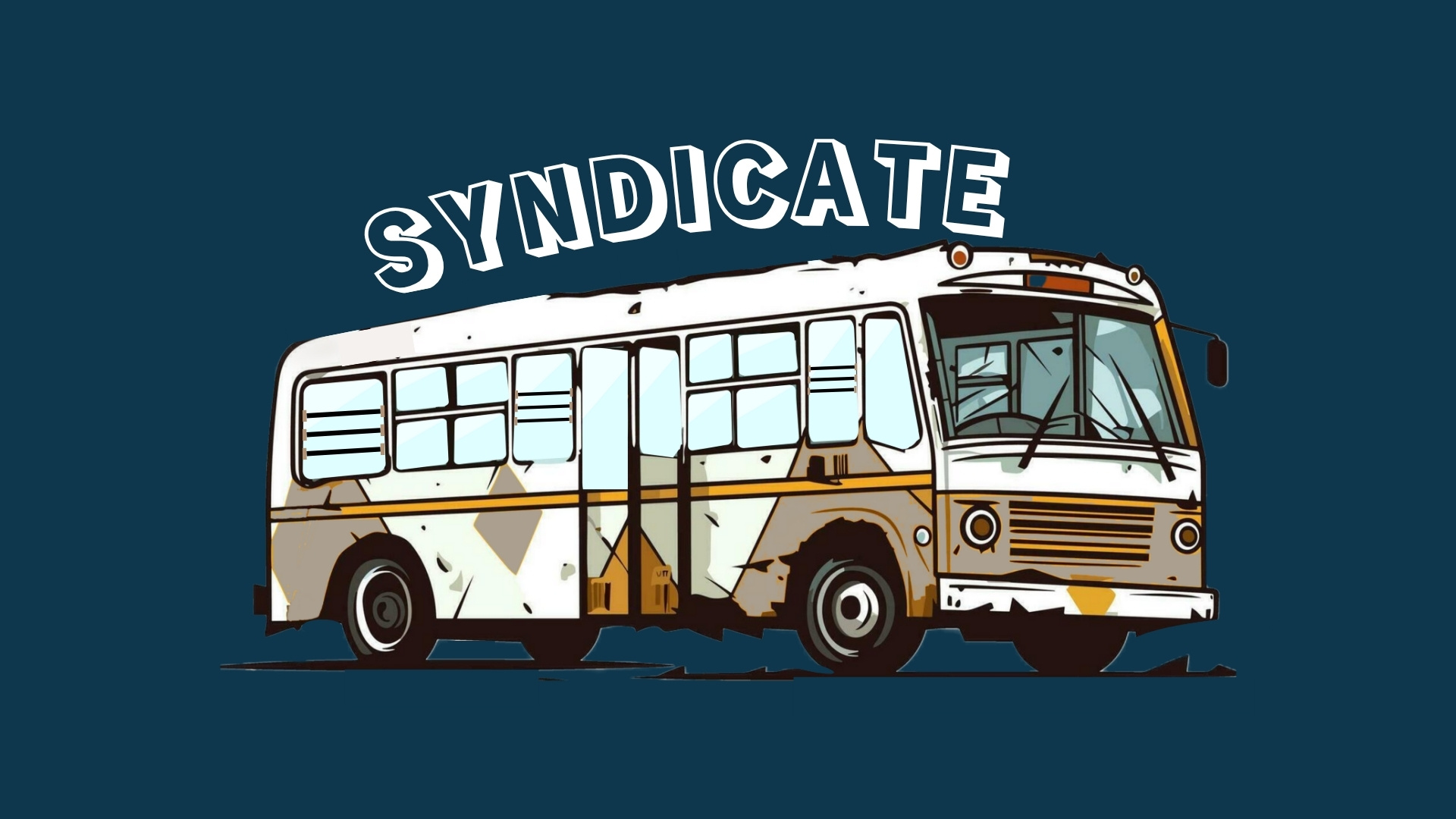
On June 2, a nationwide transport strike brought the entire road-based public transport to a standstill, leaving students, patients, caregivers, workers, and the public in large stranded. The strike continued for the next two days.
The shutdown was called by the ‘Central Struggle Committee to Save Public Transport’, a coalition of seven transport operators and workers’ associations demanding the repeal of the newly formed ride-sharing regulation, Ride-Hailing (Regulation and Management) Rules 2025,introduced by the Gandaki Province.
The coalition included the National Federation of Nepal Transport Entrepreneurs (NFNTE), the Central Federation of Public Transport (CFPT), the Nepal Federation of Truck Transporters (NFTT), the Nepal Federation of Freight Transporters (NFFT), and several workers’ unions.
Together, they demanded for the new regulation to be scrapped and urged the federal government in Kathmandu to intervene in the Gandaki Province’s jurisdiction—calling the Gandaki government’s move illegal under the 1993 Motor Vehicles and Transport Management Act, which prohibits the use of private-registered vehicles to carry passengers
Put simply, their demands sought to tighten the public transport sector—a move that would keep the sector within their grip—while the demand for federal intervention came although transport management comes under provincial jurisdiction.
More importantly, under Article 1(2) of the Constitution, any law inconsistent with the federal structure is ipso facto void to the extent of the inconsistency—making several centralised powers in the Act legally defunct on paper despite their continued use in practice.
Meanwhile, media reports widely documented the widespread disruption the three-day strike caused across the country, including a halt to already scheduled long-distance travel. Vandalism and tensions were reported, too.
A night bus en route to Pokhara from Kathmandu was reportedly vandalised by local transport union members on the morning of June 2. Similarly, a Mayur Yatayat bus was stopped in Koteshwor, and passengers were forced to get off the bus. While Sajha Yatayat operated its bus service under police protection to safeguard the commuters and the vehicles.
The KP Sharma Oli administration, with a two-thirds majority, yielded to pressure, writing to the Gandaki government to withdraw the regulations. On June 4, the Surendra Raj Pandey administration in Pokhara postponed its implementation for a month. The strike was called off the same day.
Ironically, for many, the only alternative in cities like Kathmandu remained the privately owned vehicles, which served the public during the halt. In a parallel irony, on May 29, the government announced in its budget speech for the upcoming fiscal year 2025/26 that it would end all forms of syndicates prevalent in the country.
But for many, the three-day paralysis marked more than a disruption—it signalled the resurgence of the transport syndicate, an alliance the government had largely dismantled through a major crackdown in 2018 and supposedly kept it in ‘check’ ever since.
That year, the Second Oli Cabinet, consisting of CPN-UML and CPN (Maoist Centre), backed by nearly two-thirds majority in the House of Representatives, formally dissolved the legal foundation of syndicate cartels, stepping on the 2011 Supreme Court orders.
How transport syndicate grew strong
The fifth and subsequent interim Girija Prasad Koirala governments, on January 22, 2007, and again on January 10, 2008, signed off on an arrangement that would legitimise the existing cartel control in the country’s public transport sector.
In two separate deals, the Ministry of Home Affairs (MoHA), the Ministry of Finance (MoF), and the Department of Transport Management (DoTM) cut off their own hands— reaching agreements with the NFNTE and the Federation of Truck Tanker and Transport Entrepreneurs Nepal.
The agreements required that any new transport-related organisation must obtain a mandatory recommendation from the NFNTE before being registered or issued a new route permit.
In effect, the state handed a powerful veto to transport cartels, institutionalising their gatekeeping role in the industry—enabling a system that restricted market entry, sidelined competition, and entrenched syndicate rule for years to come.
There were instructions from courts to dismantle them but in vain. In 2011, the Supreme Court, hearing a writ petition filed by Advocate Jyoti Baniya, issued orders directing the government to dismantle the transport syndicate system. In 2014, the apex court, hearing a contempt of court, summoned the Sushil Prasad Koirala government and ordered it to explain why it had failed to act against the public transport syndicate despite the earlier directive.
Such inaction and in many cases impunity had given a free rein to the syndicate members. Associations and committees under them had been employing protests, threats and vandalism as a way to curb competition and reinforce their grip while the government largely turned blind eye.
A chilling incident had happened much earlier in early 2000—the chief of the Transport Management Office for the Gandaki Zone, Jeevan Sedhain, was shot when he tried to issue new route permits. A decade later, they had become even more dominant, threatening everyone with dire consequences—from new entrepreneurs to government officials.
When Sajha Yatayat tried to expand its bus services in 2017, there was a strong protest from their side. Things got hostile for Mayur Yatayat when it was issued a route permit in 2018, with its bus being vandalised. And when they were about to be dismantled in 2018, they left no stones unturned.
Government cracks down
In a seemingly decisive move against the deeply entrenched transport syndicate, the Second Oli Cabinet in 2018 declared all transport committees illegal. It ordered that no new committees would be registered, and existing ones would no longer be renewed through the district administration offices (DAOs)—the very offices that had long functioned as gatekeepers of cartel-backed control under the Association Registration Act, 1977.
The DoTM, in the following move on April 2, 2018, amended the 2004 Transport Management Directives that scrapped the requirement for new operators to seek recommendations from existing committees—a practice that had effectively barred market entry. It also made company registration under the Companies Act 2006 mandatory for any operator seeking a route permit.
In the weeks that followed, the DoTM and DAOs began revoking route permits of vehicles found involved in syndicate enforcement, particularly those obstructing rival operators, as well as enforcing syndicate-imposed strikes. Long-route operators, often the most influential syndicate players, faced direct action for violating open competition norms.
The syndicate resisted. On May 4, transport operators initiated a nationwide strike. The state, for once, didn’t budge. Then-Home Minister Ram Bahadur Thapa ordered a sweep: arrest leaders obstructing public mobility, revoke permits, freeze syndicate-linked bank accounts, and deploy police escorts to keep vehicles running on strike days.
By May 6, at least 106 transport operators were arrested, including top brass of the FNNTE. The Nepal Rastra Bank froze 245 bank accounts linked to syndicate committees—an unprecedented move targeting the cartel’s financial networks.
A day later, on May 7, the government and the protesting operators reached a five-point agreement: a commitment to operate under company law by registering as companies; dissolve the committees, and form a task force of ministerial secretaries and transport operators with a 30-day mandate to recommend regulating the sector, among others. The deal effectively acknowledged the state’s position: public transportation would now be a corporate, regulated service provider—not a club of untouchable syndicate.
In the aftermath, between April and July 2018, 282 new transport companies were registered—signalling what was, at the time, seen as the formal end of committee control over route permits, and the beginning of a new regime of corporate and regulatory oversight.
All seemed well until the task force failed to deliver eventually, as if the government suddenly abandoned its reform efforts, which not only eroded public hopes of better and improved public transport but also gradually gave the operators free rein, again.
And seven years later, the tactics may have changed, yet the structure remains familiar. Under the banners of cooperatives, federations, and alliances, informal control over market entry, routes, pricing, and strike decisions has quietly returned.
These instances defy existing law that not only provides for Kathmandu but nationwide guarantees fare concessions and reservations across all hours, routes and distances.
Meanwhile in the following years since 2017, the public transportation sector saw the entry, advent and fall of several ride-hailing platforms with operators including Tootle, Pathao and Indrive. Additionally, numerous other platforms like Sajilo, Sahara, TaxiMandu, Yango etc., emerged in the country’s eight-year-old ride-hailing services.
Over the years, there are calls to regulate ride-hailing services too, which have been operating in a legal grey zone. There are complaints of unprofessionalism; arbitrary fare rates, harassment from riders and drivers; safety concerns for service seekers, especially women; lack of complaint, grievance and resolution mechanisms, and labour exploitation, among others. Notably, these shortcomings are rampant across the broader public transport sector.
Despite their shortcomings, the new platforms have offered much-needed relief to regular commuters frustrated by unreliable, overcrowded and time-consuming buses and taxis operating and charging at their whim.
The entry of these new operators was far from smooth. When Pathao started emerging as a dominant player in 2018, taxi driver associations rallied against the new ride-hailing service.
The Nepal Meter Taxi Entrepreneurs’ Association accused Pathao of violating fare norms and disrupting traditional operations. The Association threatened to launch its own app, which it did as ‘Metro Online Taxi’ in 2019, calling for a boycott of other platforms. Their protests continued in later years—with drivers staging roadblocks, demanding bans on the use of red-plate vehicles for public mobility service, and framing app-based platforms as illegal.
The government did not initially welcome these services either.
In January and November 2019 and March 2020, the government tried to enforce outright bans on ride-hailing. Notices from the DoTM sparked crackdowns, with police impounding vehicles and halting operations. Yet, these moves faced fierce public backlash from commuters who relied on affordable, convenient rides, as well as legal challenges.
The Supreme Court and the Patan High Court, hearing separate writs filed against these services, refused to issue orders banning or suspending these platforms. In February and March 2020, the Patan High Court directed the government to formulate proper laws and guidelines before any punitive action could be taken. This judicial restraint effectively blocked government crackdowns, forcing a reconsideration of the approach to regulating ride-hailing.
Deregulate, not destabilise
While the line between operator and regulator has long been blurred in Nepal, there are economic gains associated with when such a system is deregulated.
A 2025 research in Organisation for Economic Co-operation and Development (OECD) countries shows that transport deregulation, especially when combined with broader product market reforms, can increase GDP by 1–6% over a decade.
The working paper titled Regulation and Growth, deregulating network sectors, including transport, resulted in broad but modest economy-wide gains: labour productivity up by 5%, capital stock up by 4%, and employment by 2%.
These outcomes came not from dismantling state rules alone, but from ensuring that deregulation didn’t give way to unregulated monopolies. Deregulation in theory aims to make markets more open, responsive, and competitive. But as OECD countries have learned, liberalisation without a regulatory backbone leads to consolidation, not competition.
The pushback against provincial jurisdiction
It was only in February 2024, the federal government amended the Industrial Enterprises Act, 2020, to recognise ride-hailing as a service-oriented business in the country after seven years of operations.
In June 2024, the Supreme Court issued a directive calling on the government to formulate legal regulations on ride-hailing—covering aspects like passenger safety, insurance, licensing, and registration—citing the earlier recognition under the Industrial Enterprises Act . However, the government has yet to roll out national guidelines.
Article 57 (1) vests the federal government with exclusive authority over matters listed in Schedule 5, including the formulation of national transportation policies. This covers regulating interstate connectivity and transportation.
Similarly, Article 57 (2) vests the provincial government with exclusive authority over matters listed in Schedule 6, including formulating laws for registration, operation and regulation of transportation within provincial boundaries.
Building upon the constitutional mandate and fragmented federal provisions, all seven provinces have rolled out their respective provincial transport management acts, sharing similar provisions.
The Regulations in Gandaki were published in the provincial gazette on May 14, under the Gandaki Province Transport Management Act, 2019, to formally regulate and levy taxation on ride-hailing and self-driving (rental) services. Gandaki became the country’s first-ever province to do so.
After the Gandaki government formulated the regulations, the transport operators strongly opposed it, calling for a nationwide strike. Two vocal critics of the reform are Bijay Swar and Saroj Situala, President and General Secretary of the FNNTE, respectively. Both are affiliated with the Nepali Congress with Sitaula joining the party only recently. During the 2018 crackdown, both were detained for disrupting the transport services throughout the country and later released after agreeing to comply. Situala has gone on to say that the move would end Gandaki CM Surendra Pandey’s political career.
On June 3, the federal government wrote to the Gandaki government, requesting a temporary suspension of the regulation, which the latter agreed. In contrast, the Supreme Court on June 24 issued an interim order to put a stay on the suspension and continue implementing it, saying the policy is in the public interest. It also directed the federal authorities not to interfere with provincial jurisdiction.
On the other hand, Bagmati and Sudurpaschim governments have also recognised ride-hailing and self-driving as service-oriented businesses. However, they are yet to outline further bylaws. But the recent precedent where transport operators pushed the federal government to overrule provincial jurisdiction makes it unlikely anytime soon.
Read More Stories

NEPSE falls nearly 75 points as market sentiment wavers
The stock market was unable to maintain the gains seen on Tuesday, slipping...

India has begun its long-delayed population census. Here's why it matters
India has begun the worlds largest national population count, which could reshape welfare...
The United Nations has called on Israel to repeal a law passed by...


Business + Finance + Economy + Tech + Environment + Nepal & South Asia + In-depth Analysis + News + Investigation + Research + Expert Opinion + Anatomy of Complex Issues.