Commentary | Karki Commission Report | Government Accountability | Sushila Karki Administration
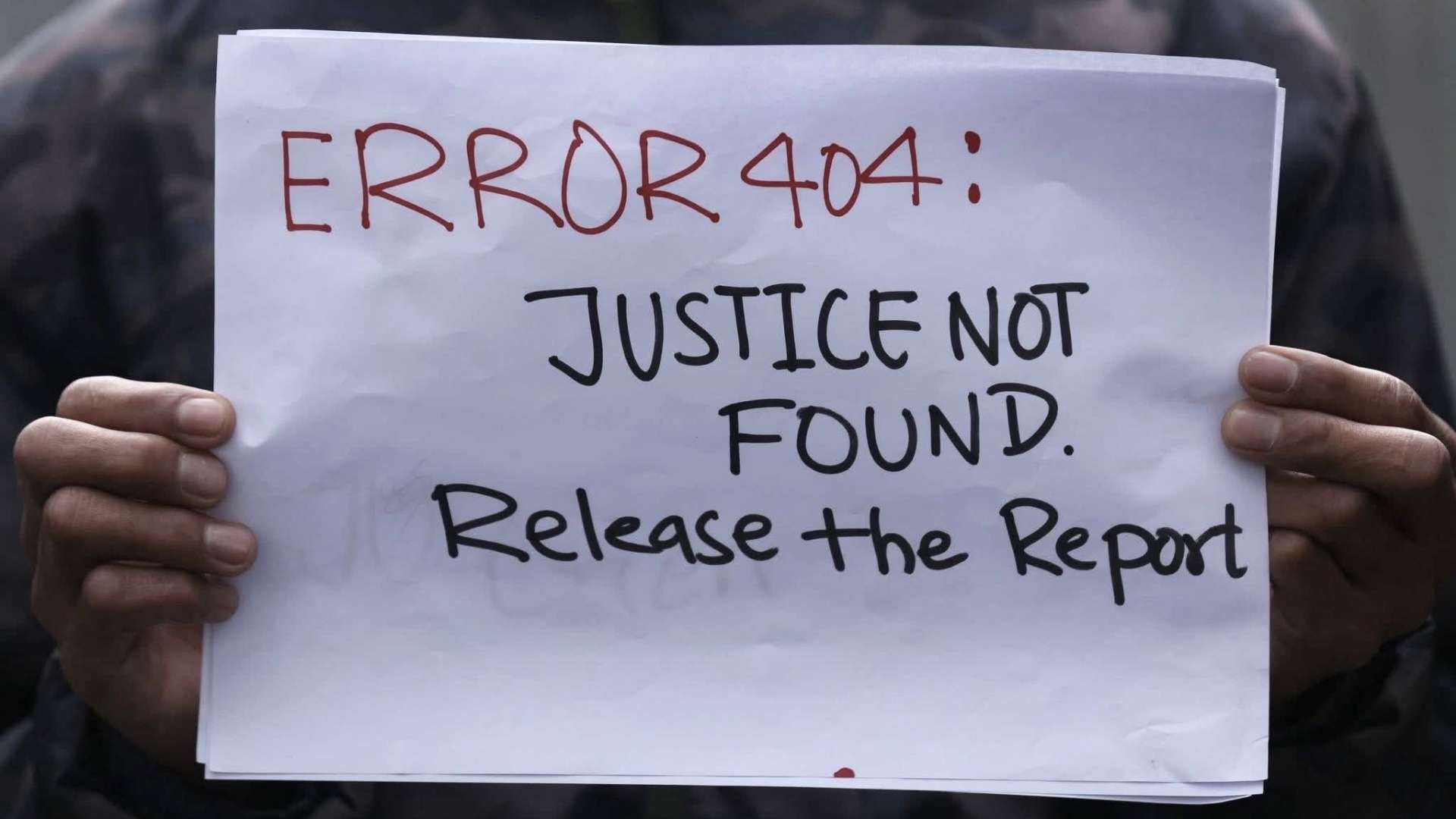
Five days after her appointment, interim Prime Minister Sushila Karki told the BBC that her government would form a judicial commission to investigate the incidents of September 8 and 9, marked by both state killings and protester violence. Initially, she said, the commission would be given a one-month deadline.
On September 22, she formed the commission, led by Gauri Bahadur Karki, a former Supreme Court justice, handing him a deadline of three months. Given the scale of the events and the political uncertainty, the revised deadline appeared more realistic.
Throughout her tenure, Karki gave several interviews in which she expressed that the September violence unfolded due to lack of accountability on the part of the political leadership, while committing to ensure accountability and principled governance. The election was her core mandate, while the commission she formed a parallel test of her tenure and leadership, one that carried significant expectations for transparency and a step towards truth about the September events, which till date polarises the nation.
The commission’s timeline soon stretched further. It was granted a one-month extension, followed by an additional 20 days. Although it was scheduled to submit its report by mid-February, the government delayed formally receiving it.
That hesitation appeared deliberate. Officials reportedly feared that accepting, or worse, publishing, the report ahead of the elections could disrupt the political process. The government ultimately received the 900-page long document on March 8, three days after the elections concluded, at a moment when the results had yet to be formally announced, but it was already evident that the Rastriya Swatantra Party would secure at least a simple majority in the House of Representatives.
Even then, the report did not immediately enter the public domain. For more than two weeks, it remained unpublished, raising questions about a government that frequently invoked transparency yet hesitated at a critical moment to uphold it.
Under mounting pressure, the Karki government on Wednesday decided to make the report public, timed just two days before PM Karki signs off from her duties. However, releasing the report follows a bureaucratic procedure from the government’s chief secretary, which could take a few days. While the decision now creates an optics of transparency, the timing allows the outgoing administration to sidestep the responsibility of actually releasing it.
Meanwhile, the government used its remaining time in office to push through contentious decisions, also overreaching, which stood against the principles of the September events.
It recommended Home Minister Om Prakash Aryal for a vacant seat in the National Assembly and appointed Adarsha Kumar Shrestha, the prime minister’s chief personal secretary, as chairperson of the National Trust for Nature Conservation. Shrestha has already assumed office. Aryal’s recommendation is on hold at the President's desk, amid controversy over breaching constitutional norms.
For her part, as Karki fell short at delivering her mandate, fragments of the report had begun circulating through headlines, investigative snippets, and political whispers. Several outlets including Kantipur, Ukera, and Ukaalo reported portions of findings, suggesting recommendations for legal action and identifying responsibility for the violence.
Other publications, including Business 360 Nepal and The Rising Nepal, went further, reporting that the commission had recommended legal proceedings against those found responsible.
The ecosystem of partial disclosure escalated on Wednesday when the weekly Jana Aastha claimed to have obtained the full report. Its report suggested not only that senior political and security officials could face legal action and even prison terms, but also made recommendations that overreach its mandate.
By Wednesday evening, several outlets reported that they had obtained the full report through Jana Aastha, accelerating its circulation in the public domain.
Official clarity is yet to come, but another layer of speculation has also begun to circulate: that the report may have been allowed, or even strategically leaked, by those within the government itself to test public reaction. It is a familiar theory in the political ecosystem, where controlled disclosures are sometimes used to gauge risk.
But the argument has its limits. For Karki, the release of the report would have brought appreciation, instead of accusations of betraying the ‘revolution’. She chose otherwise. Additionlly, the leak of such a sensitive reports highlight serious lapses in her administration's competence to maintain state confidentiality.
The leaked report, based on its accounts, appear consequential, which is precisely why the current moment is becoming problematic. While the full report has entered public view, the government that commissioned the inquiry is quietly stepping down without clearing what it intended to do with the report, subsequently shifting that onus to the new government.
When a report that could shape legal accountability is withheld but selectively revealed through leaks, the country enters uncomfortable territory, where formal findings coexist with partial narratives.
Then it begins to resemble a media trial, not because journalists are overreaching, but because the official process has stalled. That distinction matters. The media did not create the vacuum; the government did.
This pattern is not unfamiliar in Nepal. Commissions are often assigned with urgency, and their reports soon get lost in bureaucracy or used for political purposes. They later resurface years afterwards as historical footnotes rather than instruments of accountability. The interim government failed to break this pattern too. At a minimum, it owed the public clarity on two points.
First, whether it ever intended to publish the report in full, and when. Even a redacted version would have helped curb selective disclosures and established a shared factual baseline.
Second, if the interim government believed the incoming administration should take responsibility for implementation, the Karki government, recognising its limits, should have promised in size about transparency, accountability and upholding justice.
Inquiry commissions are not courts, and their findings are not legally binding. But they often serve as the starting point for institutional accountability. The prevailing silence has fueled speculation that the report may be politically inconvenient for figures across the spectrum, including Sushila Karki, KP Sharma Oli, Rabi Lamichhane, Balendra Shah, and others with stakes in the incoming Parliament.
For now, the Karki government departs without clearly articulating any of these positions, though the underlying intent, given the unfolding of events, makes it increasingly visible.
Read More Stories

NEPSE falls nearly 75 points as market sentiment wavers
The stock market was unable to maintain the gains seen on Tuesday, slipping...
India has begun its long-delayed population census. Here's why it matters
India has begun the worlds largest national population count, which could reshape welfare...
The United Nations has called on Israel to repeal a law passed by...


Business + Finance + Economy + Tech + Environment + Nepal & South Asia + In-depth Analysis + News + Investigation + Research + Expert Opinion + Anatomy of Complex Issues.